Primus for Machine Learning
Machine learning is where Primus got started. Describe something you’re curious about in one sentence, and Primus scopes the question, reads the literature, runs experiments on GPUs, and writes the paper.
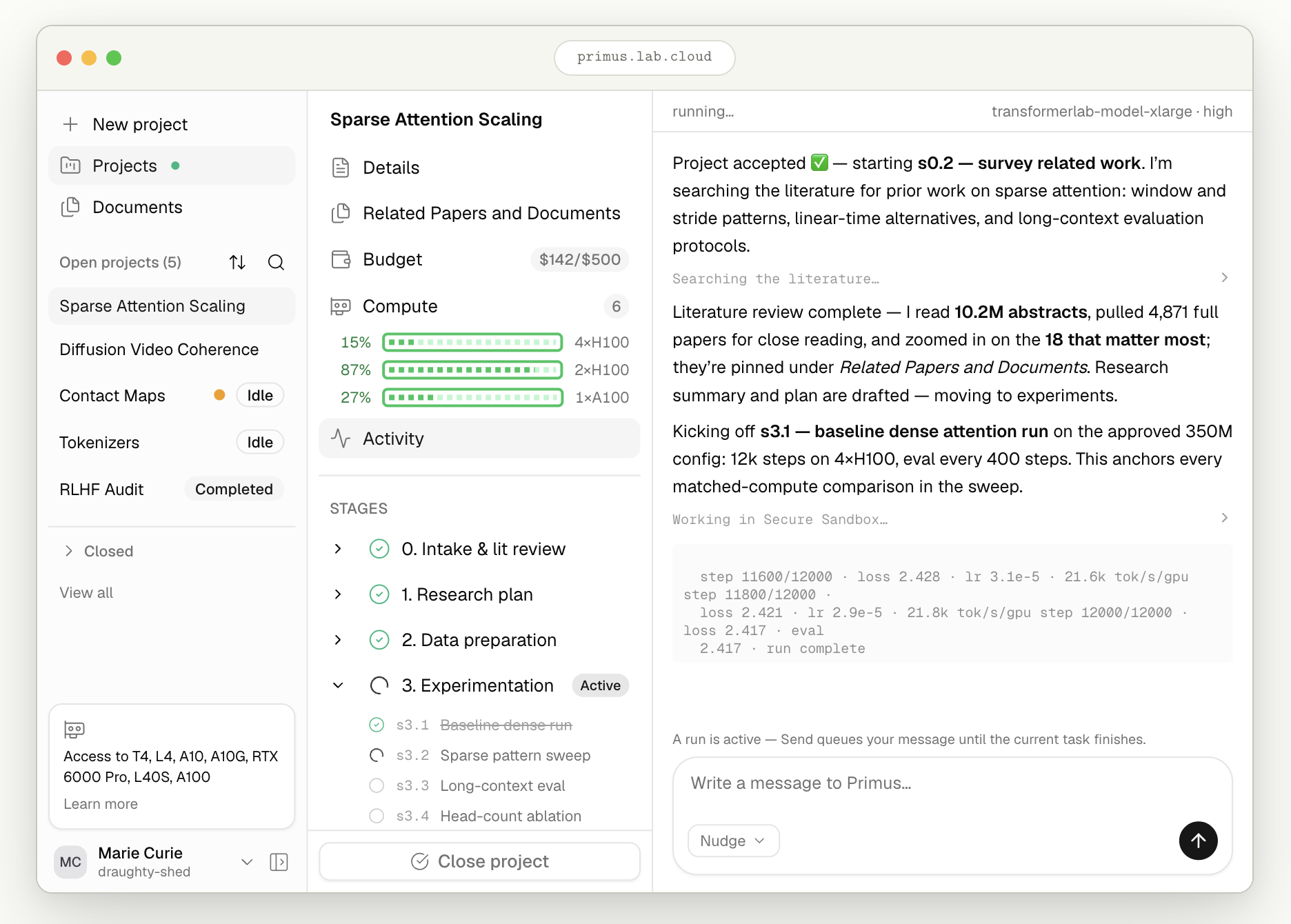
One sentence is enough
Your prompt is a direction, not a spec. You don’t need a dataset lined up, a model picked out, or a clear idea of which experiment to run. Vague is fine: Primus asks follow-up questions and sharpens the project with you before the work starts.
You don’t need to be an ML engineer either. If you are one, think of it as a team of interns: it does the literature reviews, sets up the experiments and babysits the clusters.
From prompt to paper
- 01
Scopes the question
Turns your idea into a well-posed question, and checks it with you.
- 02
Reads the literature
Studies what’s already known, and pins the papers that matter to your project.
- 03
Runs experiments
Designs them, runs them on GPUs, and iterates on what it learns.
- 04
Writes the paper
Methods, results, code and citations, including when the hunch doesn’t hold up.
Questions that tend to work
Each of these shapes has produced a finished project. The one habit worth having: aim narrow, not for the moon. Name a specific weakness and improve it without breaking everything else.
Does X cause Y?
“Does the RL clipping mechanism control how diverse the generated outputs are?”
Is that claim true?
“A vendor says their model wins on this metric. Does the win survive a better metric?”
Open question, pick a side
“Does post-training move a model’s representations toward or away from how brains process language?”
Beat the incumbent
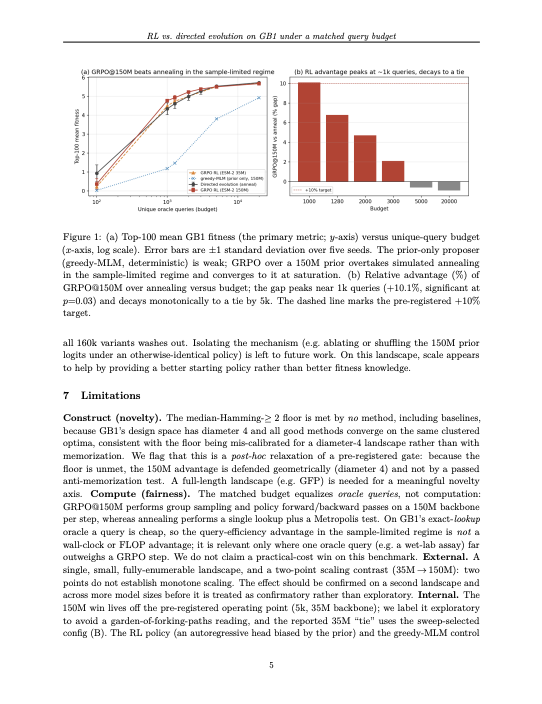
“Beat directed evolution at proposing high-fitness protein variants at the same query budget.”
Build the yardstick
“There’s no trusted automatic score for 3D-mesh quality, so build one and show it tracks human judgment.”
Fix a known failure
“Use preference optimization to fix the word-skip and repeat failures TTS models are known for.”
Port it
“Replatform this model onto architecture X and verify it holds up across the key benchmarks.”
Optimize one dimension
“Find the best quantization of model X, judged on X and Y, without losing accuracy on Z.”
Shape a hunch
“Maybe injecting a self-reflection token reduces hallucination, so let’s design something to test it.”
It keeps going, and knows when to stop
Experiments run on GPUs Primus provisions for you. By default it runs in Full Self-Driving, making its own routine sign-offs while you do something else, and you can chat with it at any point to steer: “focus on the smaller model first,” “stop tuning and write it up.” It emails you when it needs you, which is in three situations:
A blocker
Something it can’t get past on its own.
Spending past the budget
You approve a compute cap with the research plan. A run that would go past it stops and asks.
A rescope
When it wants to change what the project is about.
What you get at the end
A finished paperMethods, results and citations.
A model cardWhat was trained, on what, and how it behaves.
A reproducibility packageRaw logs, code and data: enough to re-run the work and check every claim.
Models and artifactsCheckpoints, datasets and code, with a record of how each was made.
Negative results, tooIf the hunch doesn’t hold up, the paper says so and shows why.
Research from Primus
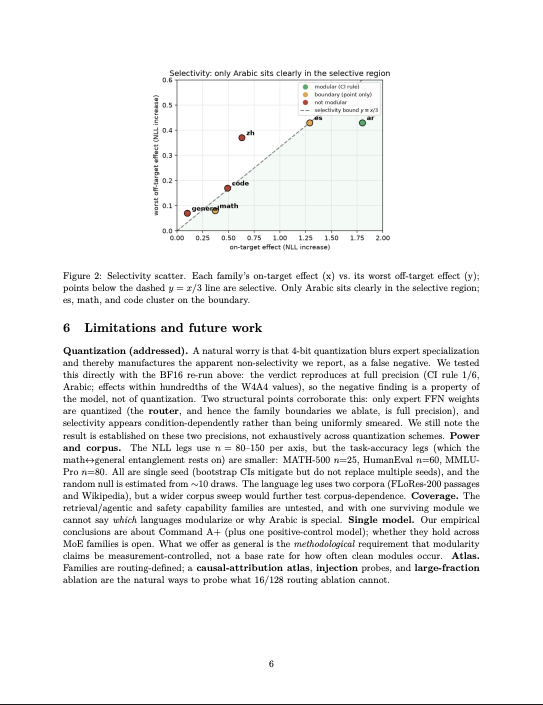
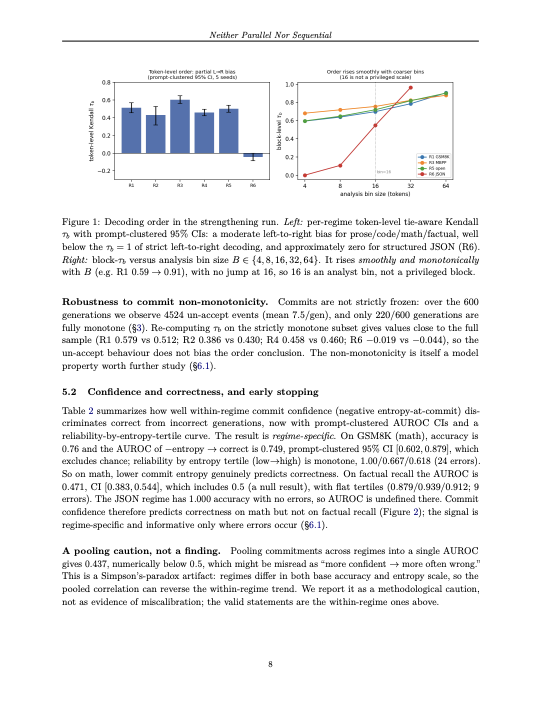
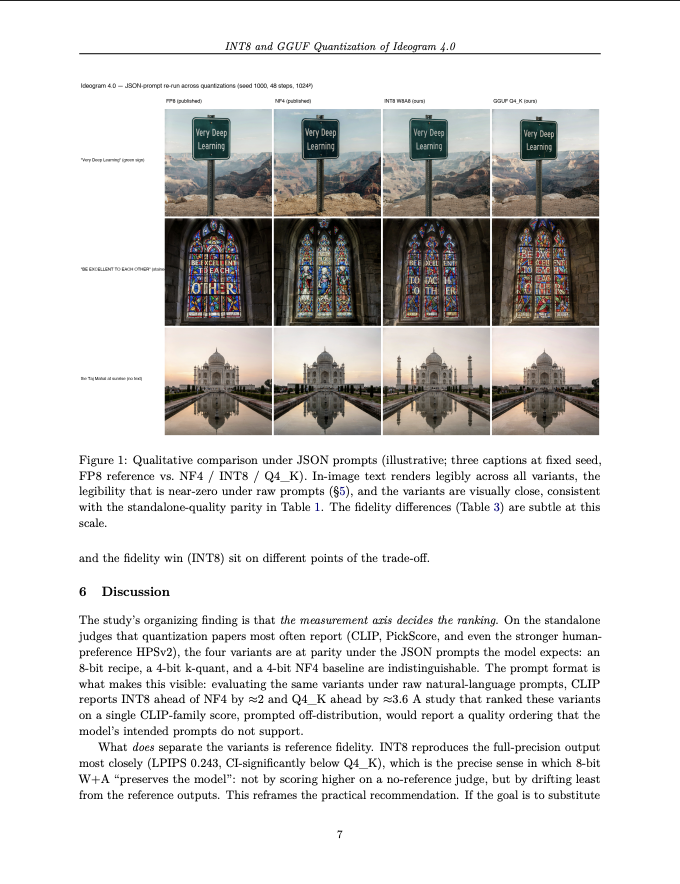
Bring the idea. Primus takes it from there.
Sign in, write your prompt, and start the project. Primus works over hours or days and keeps you posted as it goes.