What is Primus?
Think of Primus like a machine learning researcher on your team. You describe something you're curious about in a single prompt, as short as one sentence, and Primus takes it from there: it scopes the question, reads the literature, designs and runs experiments on GPUs, evaluates the results, and writes a finished research paper.
Anyone can start a project with Primus. You don't need to be an ML engineer, have a dataset ready, or know which experiment to run. Primus does that part, and shows each step as it goes.
A simple example prompt that one could give Primus could be something like:
"I think LLMs might hallucinate less if they were aware of their own token probabilities. Help me figure out an experiment around that."
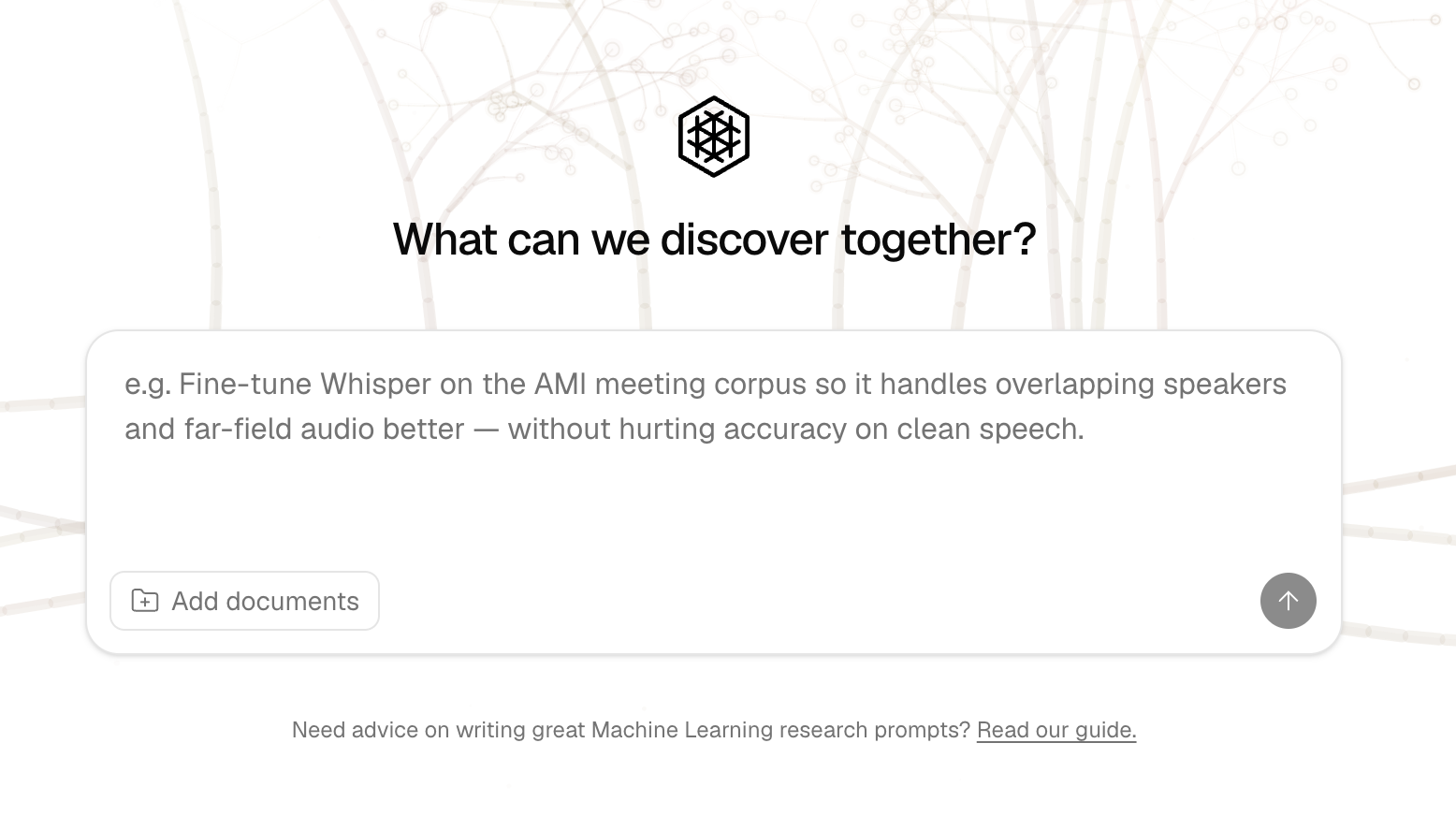
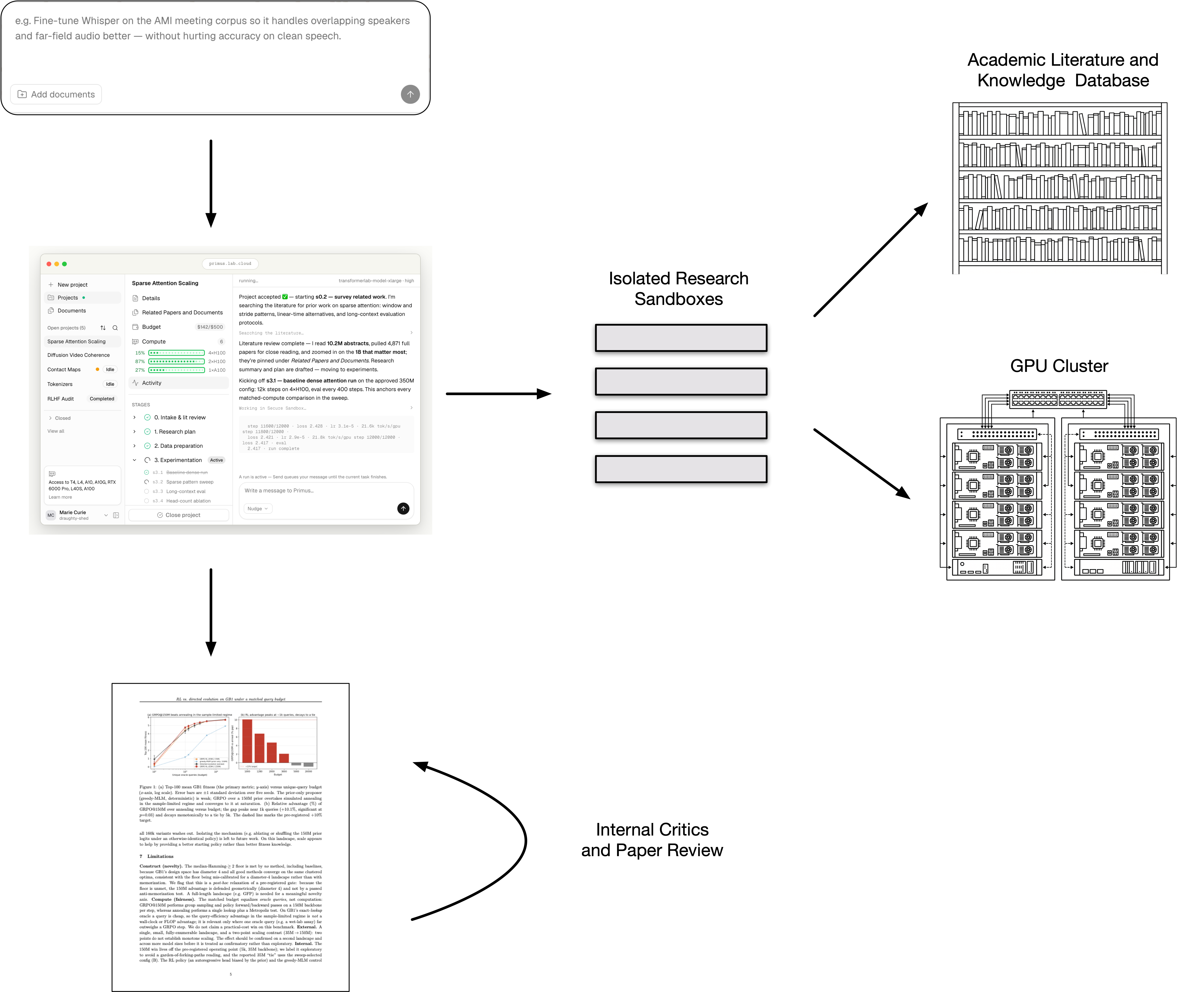
From "prompt to paper"
Primus strives to turn your idea into a well-posed question, studies what's already known, then designs and runs experiments, iterating on what it learns until it has an answer worth writing up.
Each project has a live workspace where you can watch progress, read the findings as they land, and leave notes that steer what happens next: "defer that comparison," "focus on the smaller model first." Primus picks those up and carries on.
What you get at the end
Every project ends in a written paper, with methods, results, code, and citations. Alongside it you get whatever the experiments produced, trained models and datasets included, plus a record of how each was made, so the work can be re-run and checked.
Sometimes the finding is that your hunch doesn't hold up. Primus writes that up too, with the evidence.
We publish work produced this way on our Research page.
Getting started
- Create an account at primus.lab.cloud.
- Write your prompt. One sentence is enough. See Writing research prompts for what makes a good starting direction.
- Start the project and check back in. Primus works over hours or days, keeps you posted as the work progresses, and emails you when it needs a decision from you.
Experiments run on hardware Primus provisions for you, so heavier projects (e.g. fine-tuning a large open model) burn a lot of GPU time. Primus scopes the experiment to the budget you give it, and tells you up front what a bigger version would cost.